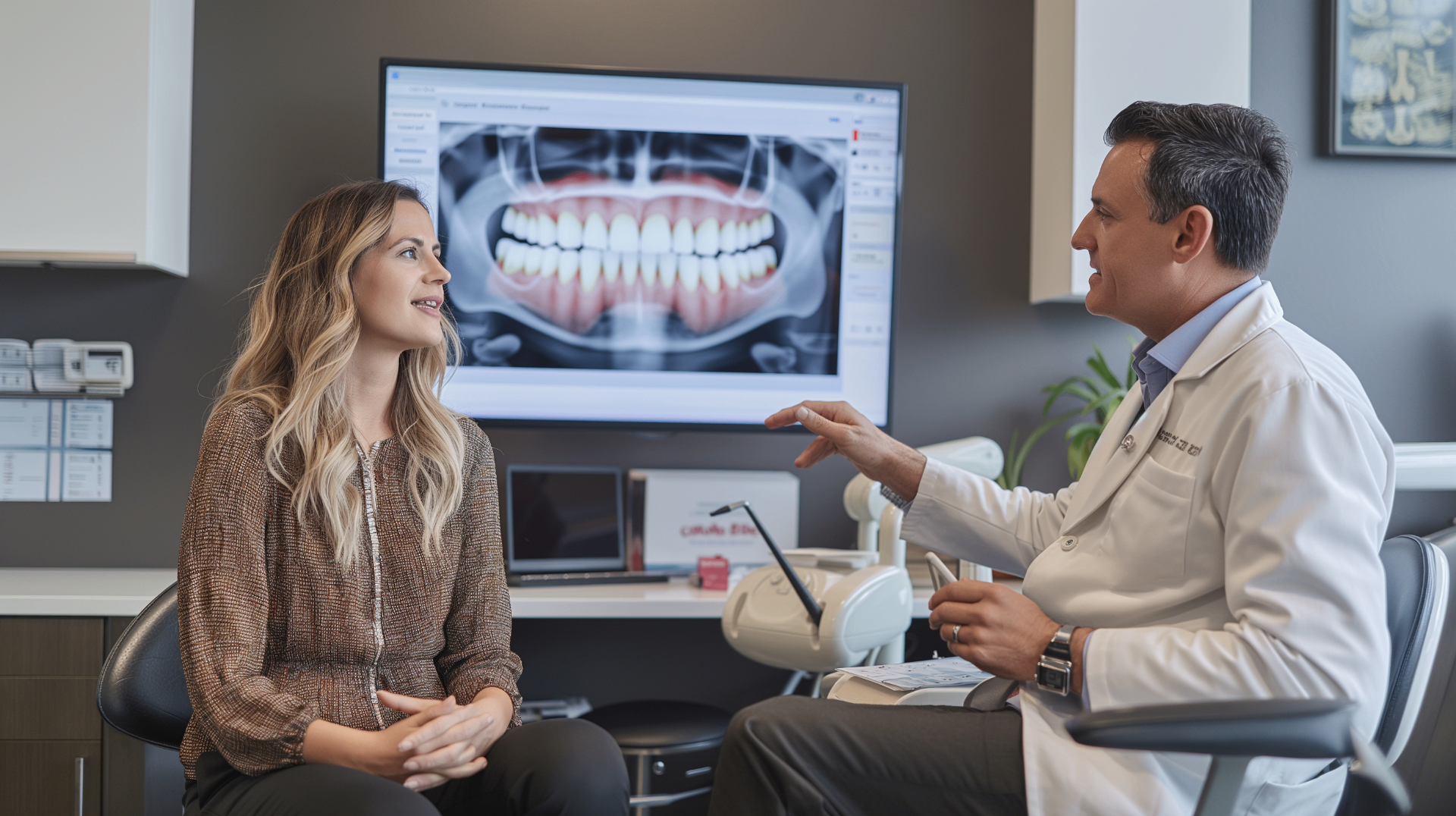
Dental implants are surgically placed into your jawbone, and the results are with you for decades. That permanence is exactly why choosing the right dental implant provider matters more than finding the lowest price.
The challenge is that dental implant marketing makes it nearly impossible to tell which providers are highly trained specialists and which are general dentists who completed a weekend implant course. Both groups run Google Ads. Both have polished websites. Both use the same before-and-after photo formats.
This checklist breaks down exactly what to look for, what to ask, and what to avoid.
What type of dentist is most qualified to place dental implants?
The most qualified providers for dental implant surgery are oral and maxillofacial surgeons, periodontists, and prosthodontists. These specialists complete three or more years of post-dental-school residency training focused specifically on implant placement and restoration. To put that in perspective, a periodontics residency involves 3,000 or more hours of advanced clinical training. A weekend implant course might cover 20.
That distinction matters because in most US states, any licensed general dentist can legally perform implant surgery. There is no legal requirement for specialty training. The difference between a specialist and a general dentist placing implants is not a matter of legality. It is a matter of training depth, surgical volume, and the ability to manage complications when they arise.
The best outcomes often involve a team approach: an oral surgeon or periodontist placing the implants and a prosthodontist designing and fitting the final prosthetic teeth.
What credentials should I verify before choosing an implant provider?
Before choosing a provider, verify four things: their specialty training, their board certification status, their annual implant case volume, and their advanced training credentials.
Specialty training
Confirm whether the provider completed a residency in oral surgery, periodontics, or prosthodontics. This information is available through your state dental board's license verification system.
Board certification
Within each specialty, board certification represents an additional layer of vetting. Look for Diplomate status with the American Board of Oral and Maxillofacial Surgery, the American Board of Periodontology, or the American Board of Prosthodontics.
Case volume
Ask how many implant cases the provider personally completes each year. A surgeon performing 40 to 80 full arch cases annually is in the range of experienced but not rushed. Extremely high volume can indicate assembly-line care with less individual attention.
Advanced training
Legitimate continuing education comes from institutions like the Misch International Implant Institute, the Pikos Institute, or manufacturer-sponsored programs from Nobel Biocare and Straumann. These are multi-year commitments, not weekend seminars.
What questions should I ask at a dental implant consultation?
Ask these 10 questions at every implant consultation. A qualified provider will answer all of them clearly and without hesitation.
- How many implant cases do you personally complete each year?
- What is your five-year success rate, and how do you track it?
- Which implant brand do you use and why?
- What material will the final prosthetic be made from (acrylic, composite, or zirconia)?
- Do you use 3D CBCT imaging and computer-guided surgery?
- Will you personally perform my surgery, or will it be delegated?
- What does your warranty cover, and can I get it in writing?
- If an implant fails, what is the cost to replace it?
- How many follow-up visits are included in the quoted price?
- Can I speak with two or three previous patients?
A provider who answers these questions thoroughly and in writing is demonstrating the transparency you want from someone performing surgery on you. A provider who rushes past them or gives vague answers is telling you something important.
What red flags should I watch for when choosing a dental implant provider?
The most common red flags are high-pressure sales tactics, uniform pricing without individual assessment, no 3D imaging capability, vague warranty terms, and an unwillingness to provide patient references.
High-pressure sales
If a consultation ends with a "today only" discount or a financing application pushed in front of you before you have had time to think, leave. Legitimate providers understand that a decision this significant requires consideration.
Flat-rate pricing
Dental implant treatment is not a one-size-fits-all procedure. Bone density, gum health, existing dental work, and medical history all affect what is needed. A provider quoting the same price to every patient before doing a comprehensive exam is not individualizing care. If you are considering a full arch procedure like All-on-4, this is especially important. Not every patient is a candidate, and the treatment plan should reflect your specific anatomy and health history. Our guide on whether you are a candidate for All-on-4 dental implants covers the key factors your provider should be evaluating.
No 3D imaging
Modern implant planning requires CBCT (cone beam computed tomography) imaging to map bone structure, nerve location, and sinus proximity. Providers without this technology on-site are either outsourcing it (acceptable) or skipping it (not acceptable).
No written warranty
Reputable implant manufacturers offer warranties on the implants themselves. The provider's warranty on their work is separate. If no one can produce warranty terms in writing, assume there is no meaningful warranty.
Stock or AI-generated before-and-after photos
Real patient photos have inconsistent lighting and real anatomy. Ask to see photos of patients the provider has personally treated, not marketing images.
How much do dental implants cost, and why does price vary so much?
A single dental implant typically costs between $3,000 and $6,000. Full arch treatment like All-on-4 ranges from $20,000 to $40,000 per arch. The price variation reflects differences in the surgeon's training, the implant brand, the prosthetic material, imaging technology, and how much follow-up care is included.
Patients who choose a provider based solely on the lowest quote often pay more in the long run. Failed implants require removal, bone grafts may be needed before re-treatment, and the replacement prosthetic is a separate cost. A $15,000 savings on the front end can become a $40,000 problem within a few years.
The goal is not to find the cheapest provider. It is to find a qualified provider at a fair price with transparent terms.
How do I compare dental implant providers effectively?
The most effective way to compare providers is to consult with at least three, request written treatment plans from each, and compare them side by side on five factors: the surgeon's credentials, the implant brand, the prosthetic material, what is included in the price, and the warranty terms.
Do not compare on price alone. Compare on value. A $30,000 quote that includes zirconia prosthetics, 3D-guided surgery, two years of follow-up care, and a written warranty is a fundamentally different offering than a $22,000 quote that includes acrylic prosthetics, no guided surgery, and three follow-up visits.
Write down the specifics from each consultation. Memory is unreliable when you are processing a lot of new medical information. A simple spreadsheet with one column per provider and one row per factor makes the comparison straightforward.

What is the best way to find qualified dental implant providers near me?
The best approach is to use a credential-focused directory, cross-reference with your state dental board, and consult with multiple providers before committing.
One of the most common frustrations in researching dental implants is that the providers who show up first in search results are not necessarily the best clinicians. They are the ones spending the most on advertising. A highly qualified specialist with decades of experience may appear on page three of Google, while a general dentist with a large ad budget dominates the top results.
Dental Implant Directory was built to solve this problem. It is an independent directory of dental implant providers organized by specialty, location, and credentials rather than by advertising spend. You can filter by oral surgeons, periodontists, and prosthodontists, review each provider's qualifications, and build your shortlist in minutes.
What should I know about All-on-4 recovery before choosing a provider?
If you are considering full arch treatment, the provider you choose will have a significant impact on your recovery experience. All-on-4 recovery involves dietary restrictions, healing milestones, and follow-up appointments that vary depending on the provider's protocol and the materials used.
Before committing to a full arch provider, make sure you understand the full recovery timeline and what to expect at each stage. Our All-on-4 Recovery Guide walks through the process from day one through final prosthetic delivery.
Patient Checklist: Steps Before Committing to a Provider
Follow these six steps in order before signing anything or paying a deposit.
- Get an independent opinion on whether implants are the right treatment for your situation. Not every patient is a candidate. If you are considering All-on-4, start with our guide on candidacy requirements.
- Build a shortlist of three to five qualified providers using Dental Implant Directory and your state dental board's license verification system.
- Schedule consultations with at least three providers. Bring the 10-question list above. Take notes.
- Request a written treatment plan from each provider. Compare them side by side.
- Ask each provider for two or three patient references. Contact them.
- Give yourself at least one week between the final consultation and paying any deposit. Decisions of this magnitude should never be made under pressure.
The Bottom Line
The provider you choose matters more than the price you pay. Dental implants are a long-term investment in your health, your ability to eat, and your confidence. The patients who end up satisfied with their results are the ones who verified credentials, asked detailed questions, compared multiple providers, and gave themselves time to decide.
Start with the credentials. Use the questions. Compare the treatment plans. And when you are ready, find qualified providers near you at Dental Implant Directory.
Ready to find a qualified provider?
Search our independent directory of dental implant providers organized by specialty, location, and credentials.