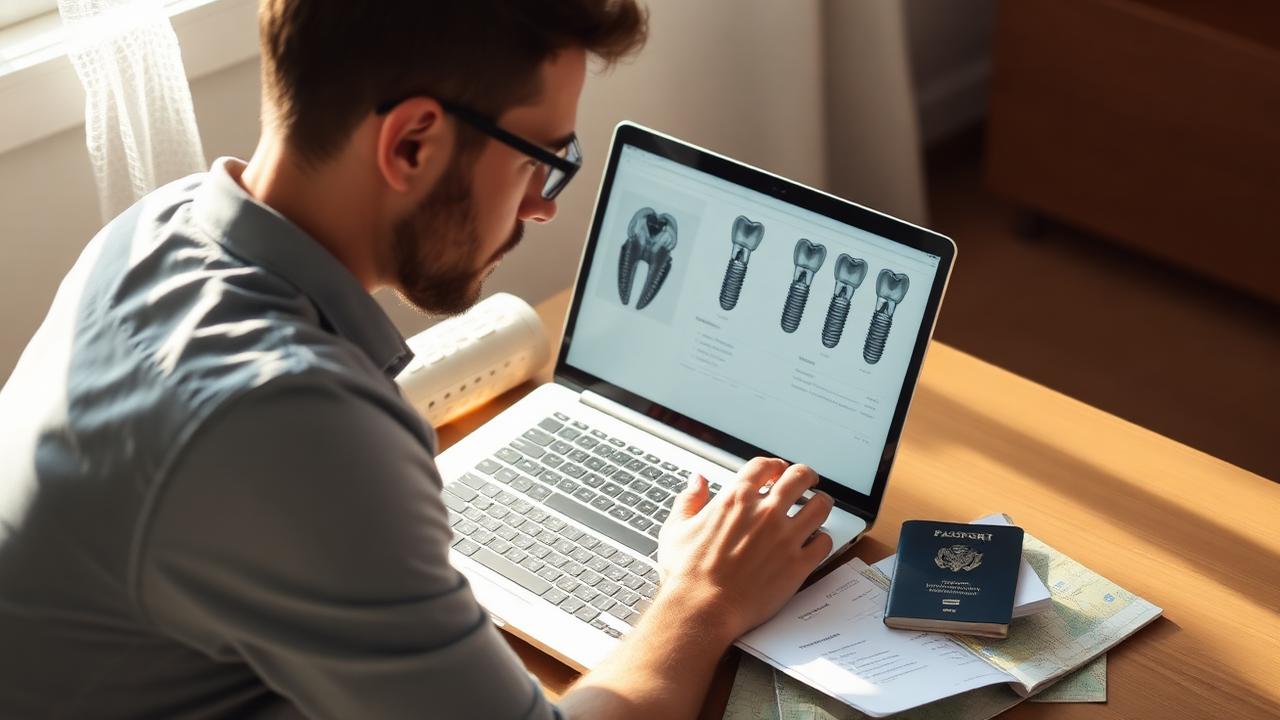
Dental implant tourism has grown into a multi-billion-dollar industry, and two countries dominate the conversation: Mexico and Turkey. Both promise significant savings over US prices. Both have clinics marketing aggressively to American patients. And both have real success stories alongside real horror stories.
The problem is that most comparison articles are written by clinics in one of these countries, which means the analysis is tilted before it starts. A Turkish clinic's blog will emphasize Turkey's advantages. A Tijuana practice will make the case for Mexico. Neither will give you the full picture, because the full picture includes uncomfortable truths about both destinations.
This guide compares Mexico and Turkey across the factors that actually matter: cost, provider qualifications, logistics, follow-up care, legal protections, and risk. The goal is not to pick a winner. It is to give you enough honest information to decide whether either option makes sense for your specific situation.
How Much Do Dental Implants Cost in Mexico vs. Turkey?
Turkey is generally cheaper on paper. A single dental implant in Turkey ranges from $400 to $900, while Mexico typically runs $750 to $1,600 per implant including the crown and abutment. For full arch procedures like All-on-4, the gap widens further. Turkish clinics advertise All-on-4 packages starting from $2,500 to $6,000 per arch. In Mexico, All-on-4 packages typically start at $7,000 to $15,000 per arch.
For context, the same All-on-4 procedure in the United States ranges from $20,000 to $40,000 per arch depending on the provider, materials, and location.
Why Turkey is cheaper
Turkey's cost advantage comes from three factors: the steep depreciation of the Turkish Lira against the US dollar, lower labor and overhead costs compared to Mexico, and intense competition among a high volume of dental tourism clinics concentrated in cities like Istanbul, Antalya, and Izmir. These are structural economic factors, not necessarily indicators of lower quality.
Why Mexico costs more (but still saves you 50-75%)
Mexico's prices are higher than Turkey's but still represent 50% to 75% savings over US costs. The Mexican Peso is more stable than the Lira, labor costs are somewhat higher, and border-town clinics serving American patients price their services in USD. Mexico also does not benefit from the same scale of dental tourism infrastructure that Turkey has built. That said, Mexico's prices more closely reflect the actual cost of using premium implant brands and materials without the volume discounting that Turkish clinics achieve through package-deal economics.
What the price does and does not include
This is where comparisons get misleading. Many Turkish clinics quote all-inclusive packages that bundle the implant procedure with hotel stays, airport transfers, and sometimes meals. The sticker price looks unbeatable until you factor in international airfare ($800 to $1,500 round trip from the US to Istanbul), the need for a second trip 3 to 6 months later for the permanent prosthetic, and the cost of managing any complications from 6,000+ miles away.
Mexican clinics, especially those near the US border in Tijuana, Los Algodones, or Cancun, rarely bundle accommodation because they do not need to. Many American patients drive across the border and return home the same day. The total out-of-pocket cost, including travel, is often comparable between the two destinations once you account for airfare and multiple trips to Turkey.
How Do Provider Qualifications Compare Between Mexico and Turkey?
Both countries have qualified implant specialists. Both also have undertrained providers performing complex procedures they should not be handling. The difference is in how you verify qualifications and what regulatory protections exist.
Mexico
Mexican dental schools follow curricula similar to US programs, and many Mexican implant specialists train in the United States or hold memberships in organizations like the American Academy of Implant Dentistry (AAID) or the International Congress of Oral Implantologists (ICOI). Border-town clinics in particular cater to American patients and often employ dentists who are fluent in English and familiar with US clinical standards.
Mexico's dental regulatory body, the Colegio Nacional de Cirujanos Dentistas, oversees licensing. However, enforcement varies by state, and there is no centralized, publicly searchable database equivalent to a US state dental board. You can verify credentials, but it requires more effort.
Turkey
Turkey produces a high volume of dentists. Turkish dental schools are generally well-regarded, and many top clinics in Istanbul and Antalya employ specialists trained in Europe. Turkey also has JCI (Joint Commission International) accredited facilities, which indicates a baseline level of institutional quality.
The challenge in Turkey is the sheer volume of dental tourism clinics. The market grew rapidly, and not every clinic operating under the dental tourism banner employs board-certified implant specialists. Social media marketing has driven enormous patient volume to clinics that prioritize speed and throughput. The term "Turkey Teeth" emerged in the UK to describe the uniformly artificial-looking results some patients bring home, often from aggressive veneer or crown preparations that damage healthy tooth structure.
The bottom line on credentials
In both countries, the quality of your outcome depends almost entirely on the specific provider you choose, not the country. A board-certified periodontist in Tijuana using Straumann implants with CBCT-guided surgery will deliver better results than a general dentist in Istanbul using off-brand implants without guided planning. And vice versa. The country is not the variable. The clinician is.
Before choosing any provider abroad, verify the same credentials you would verify at home. Our guide on how to choose a dental implant provider covers exactly what to look for, and those standards apply whether the provider is in Houston or Istanbul.
What Are the Logistics of Getting Dental Implants in Mexico vs. Turkey?
Logistics is where Mexico holds a significant, often underappreciated advantage for American patients.
Travel distance and time
Mexico shares a 2,000-mile border with the United States. Patients in Southern California can drive to Tijuana in under an hour. Patients in Texas can reach border clinics in a few hours. Even Cancun is a 2 to 3 hour flight from most major US cities.
Turkey requires a minimum 10-hour flight from the East Coast and 12+ hours from the West Coast. You lose at least one full day to travel in each direction, and jet lag is a real factor when you are recovering from oral surgery.
Multiple trips
Dental implant treatment is not a single-visit procedure. Most cases require at least two trips: one for implant placement and one for the permanent prosthetic 3 to 6 months later after osseointegration (the process of the implant fusing with the jawbone). Some cases require a third trip for bone grafting before implants can even be placed.
Two round trips to Tijuana is a manageable inconvenience. Two round trips to Istanbul is a significant commitment of time and money. Factor in roughly $1,000 to $1,500 per round-trip flight, plus accommodation and meals for 5 to 7 days each visit.
Time zone and communication
Mexico shares time zones with the United States, which makes phone and video consultations simple. Turkish clinics are 7 to 10 hours ahead of US time zones, which limits real-time communication to narrow windows.
What Happens If Something Goes Wrong?
This is the question most dental tourism articles gloss over, and it is the most important one.
Follow-up care
If a complication arises after you return home, you need a local dentist willing to treat you. Here is the uncomfortable reality: many US dentists are reluctant to take over care for implant work done abroad. They face potential liability for someone else's surgical decisions, and they may not have records, imaging, or knowledge of what was done.
With Mexico, the proximity advantage applies to complications too. A patient in San Diego can return to their Tijuana provider within hours if an issue arises. A patient who had surgery in Istanbul faces a 24-hour travel commitment just to get back in the chair, often at significant additional cost.
Legal recourse
If something goes seriously wrong in Mexico, you have limited but existing legal options. Mexico has a patient rights framework, and some border-town clinics carry malpractice insurance that covers US patients. You can also pursue claims through Mexican courts, though the process is slow and unfamiliar.
In Turkey, legal recourse for a foreign patient is significantly more difficult. Different legal system, different language, different jurisdiction. Pursuing a malpractice claim from the United States against a Turkish clinic is expensive and rarely successful. Some Turkish clinics offer warranties that require you to return to Turkey for corrective work, which only helps if the clinic is still in business and you can afford the trip.
Warranty enforcement
When a US-based provider offers a warranty, enforcing it is straightforward. When a clinic in another country offers a warranty, enforcement depends entirely on that clinic's willingness to honor it and your ability to get there. Mexico's proximity makes warranty visits feasible. Turkey's distance makes them a major logistical and financial decision.
Should I Be Concerned About Implant Brands and Materials?
Yes. And this concern applies equally to both countries.
Premium implant brands like Straumann (Switzerland), Nobel Biocare (Sweden), and Zimmer Biomet (US) are available in both Mexico and Turkey. These are the same FDA-cleared, CE-marked implants used by top providers in the United States. The implant itself is manufactured to the same specification regardless of where it is placed.
The concern is that not every clinic uses these brands. Some clinics, particularly those offering the lowest prices, use lesser-known implant systems from Korea, China, or domestic manufacturers. These implants may have limited long-term clinical data and may not be serviceable by a US dentist if you need maintenance or repair years later.
Before committing to any provider abroad, ask three specific questions:
- What is the exact brand and model of the implant being placed?
- Will I receive a written record of the implant serial number and specifications?
- Is this implant brand serviceable by dentists in the United States?
The same scrutiny applies to prosthetic materials. There is a meaningful difference between an acrylic temporary prosthetic and a zirconia permanent bridge. If the quoted price seems too good to be true, check whether the prosthetic material is what you actually want long-term.
If you are considering a full arch procedure, understanding whether you are a candidate for All-on-4 should come before choosing a destination. Your bone density, medical history, and specific anatomy determine the treatment plan, not the other way around.

How Do I Decide Between Mexico and Turkey for Dental Implants?
Neither country is universally better. The right choice depends on your specific circumstances. Here is a framework for thinking through it.
Mexico may be the stronger choice if:
- You live in the southern or western United States and can reach a border clinic easily
- You want to minimize travel time and cost across multiple required visits
- You value the ability to return quickly if complications arise
- You prefer to communicate with your provider in your own time zone
- You are comparing total cost of treatment including all travel expenses, not just the procedure price
Turkey may be the stronger choice if:
- You are comparing Turkey to full US prices and the savings are large enough to justify international travel
- You have identified a specific JCI-accredited clinic with a named, credentialed specialist
- You are comfortable with the logistical commitment of two or more international trips
- You have a support system (friend, family, or travel companion) for post-surgical recovery abroad
- You have thoroughly vetted the clinic's warranty terms and understand what happens if corrective work is needed
Neither country is a good choice if:
- You have not yet confirmed whether you are a candidate for the procedure you are considering
- You are making the decision based primarily on the lowest advertised price
- You have not verified the specific provider's credentials, case volume, and implant brand
- You do not have a plan for follow-up care and potential complications once you return home
What Questions Should I Ask Any Overseas Dental Implant Provider?
Regardless of destination, ask these questions before committing. A credible provider will answer all of them in writing.
- What are your specific credentials and specialty training in implantology?
- How many implant cases do you personally complete per year?
- What exact implant brand and model will be used?
- What material is the final prosthetic (acrylic, composite, or zirconia)?
- Do you use CBCT imaging and computer-guided surgical planning?
- What does your warranty cover, and what are the terms if I need corrective work?
- Will I receive written documentation of all implant specifications and serial numbers?
- What is included in the quoted price, and what costs are separate?
- How do you handle complications that arise after I return home?
- Can you provide references from US-based patients who have completed treatment?
These are the same questions you should ask a domestic provider. The standards do not change because you cross a border. If anything, they become more important when follow-up care is harder to access.
For the full checklist of what to evaluate in any implant provider, domestic or international, read our guide on how to choose a dental implant provider.
The Bottom Line
Dental implant tourism in Mexico and Turkey can produce excellent results, but it can also produce expensive failures. The country you choose matters less than the specific provider, the materials used, and whether you have a realistic plan for follow-up care. Mexico offers a significant logistical advantage for US patients because of proximity, shared time zones, and lower travel costs across multiple visits. Turkey offers lower procedure prices but higher total travel costs and greater complexity when complications arise. Neither destination eliminates the need to do the same due diligence you would do at home. And when you are ready to compare qualified providers, whether domestic or abroad, find verified dental implant providers at Dental Implant Directory.
Ready to find a qualified provider?
Search our independent directory of dental implant providers organized by specialty, location, and credentials.